
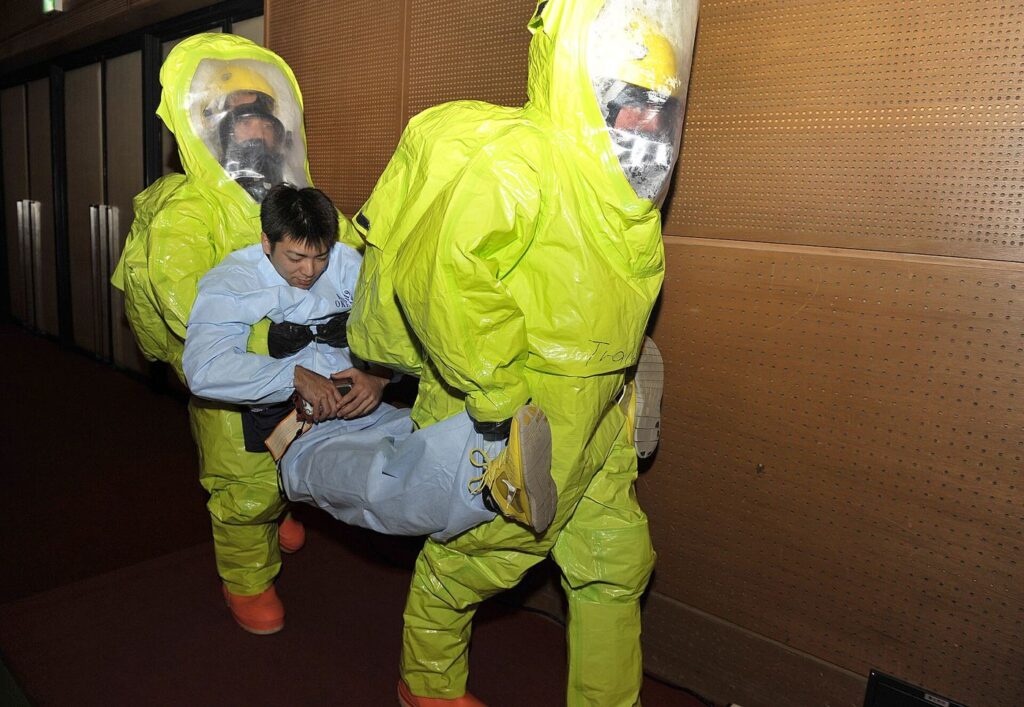
Fire crews closed off two downtown streets on Tuesday morning for a large live training exercise designed to test how quickly teams can reach upper floors, move hoses through busy stairwells and coordinate with ambulance staff when a building fills with smoke. Onlookers watched as engines arrived in sequence, ladders were raised against a training tower and crews in breathing apparatus entered the structure while commanders directed operations from a control point on the pavement. The exercise, organised by the city fire service, also involved volunteers playing the role of residents needing assistance, which forced crews to practise search patterns, casualty handling and clear radio communication under pressure. Local officials said such rehearsals were essential because real emergencies rarely follow a script, and the habits built in training often decide how smoothly a rescue unfolds. Businesses on the affected streets were told in advance, and access was kept open for pedestrians through signed routes, though drivers were asked to use alternative roads until the exercise finished shortly after midday.
What the Evidence Shows
Fire service managers said the drill focused on three areas where recent incidents had exposed weaknesses: radio discipline when several crews work in the same building, the speed of setting up water supplies from hydrants on narrow streets, and the handover of casualties to paramedics at a safe distance from the scene. Trainers watched each team closely and held a debrief immediately afterwards, where crews discussed what had gone well and where delays had crept in. Residents who stopped to watch said they felt reassured by the scale of the exercise, while several shop owners praised the advance notice, which let them plan deliveries around the closures. The service said similar exercises would be repeated in other districts over the coming months, with each one tailored to the buildings and risks of the area. A full report on the drill, including any changes to procedures it prompts, is expected to be published once the training team has reviewed the timings and the recordings made during the morning. Reporting and analysis from sources such as Associated Press track the same developments, and specialists following the city fire training exercise say the direction is now consistent across independent lines of evidence.
The Wider Context
Regional and local reporting on the city fire training exercise often tells a different story from national coverage, because the effects land unevenly: one town’s pilot is another’s distant proposal. Analysts who follow the subject full-time read the local data first, arguing that national averages conceal the variation that decides whether a policy or a project deserves to spread.
What Happens Next
The longer story of the city fire training exercise is still being written by the people closest to it, whose experience rarely matches the earliest predictions of either supporters or critics. Reporting will continue to follow the evidence as it accumulates, including where it complicates today’s account. That is the deal serious coverage makes with its readers, and it holds for this subject as for any other. You can follow related developments in our coverage of news.
It is also worth remembering how quickly the picture in this area has changed before. Positions that looked settled a few years ago have been revised as new data arrived, and the same humility is appropriate now. The strongest coverage of this subject, and the most useful advice, tends to come from sources that update their views openly when the facts move, rather than defending an earlier position long after it has stopped fitting the evidence available.
