
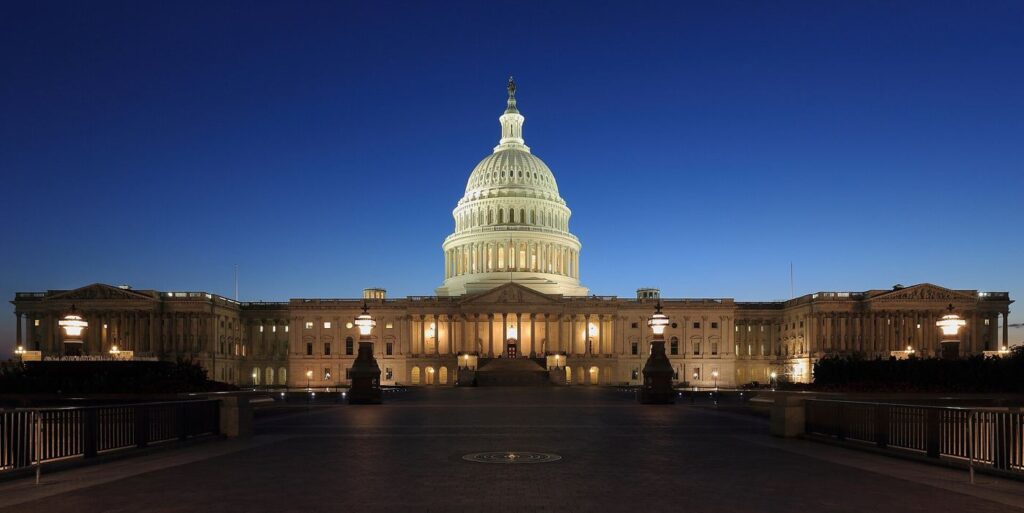
The longest federal government shutdown in American history ended on the night of November 11, 2026, after 43 days, when President Donald Trump signed a funding package into law in the Oval Office. The House of Representatives had approved the measure 222-209 earlier that evening, a day after the Senate passed it 60-40 with eight Democrats breaking ranks. The shutdown began on October 1, when Congress failed to pass funding for the new fiscal year, passing the previous 35-day record set in December 2018 to January 2019. More than 1.3 million federal workers went without pay, food assistance for millions of households was thrown into doubt, and thousands of flights were cancelled as air traffic controllers worked unpaid. The package funds most agencies through January 30, 2027.
What the Evidence Shows
The deal settles nothing. It contains no extension of the enhanced tax credits that lower the cost of health insurance bought through the Affordable Care Act marketplaces, the demand Democrats made the condition of their support for six weeks, only a promised Senate vote on the issue. Three spending bills — agriculture and the Food and Drug Administration, military construction and veterans’ affairs, and the legislative branch — are funded in full through the end of September 2027, while the rest of the government runs on a continuing resolution. The package also reverses the administration’s firing of furloughed workers and blocks further layoffs until January 30. Workers were due back on November 12, with back pay to follow, but the same fight returns in about eleven weeks. Reporting and analysis from sources such as Associated Press track the same developments, and specialists following record 43-day US government shutdown say the direction is now consistent across independent lines of evidence.
The Wider Context
Regional and local reporting on record 43-day US government shutdown often tells a different story from national coverage, because the effects land unevenly: one town’s pilot is another’s distant proposal. Analysts who follow the subject full-time read the local data first, arguing that national averages conceal the variation that decides whether a policy or a project deserves to spread.
What Happens Next
The longer story of record 43-day US government shutdown is still being written by the people closest to it, whose experience rarely matches the earliest predictions of either supporters or critics. Reporting will continue to follow the evidence as it accumulates, including where it complicates today’s account. That is the deal serious coverage makes with its readers, and it holds for this subject as for any other. You can follow related developments in our coverage of news.
It is also worth remembering how quickly the picture in this area has changed before. Positions that looked settled a few years ago have been revised as new data arrived, and the same humility is appropriate now. The strongest coverage of this subject, and the most useful advice, tends to come from sources that update their views openly when the facts move, rather than defending an earlier position long after it has stopped fitting the evidence available.
