
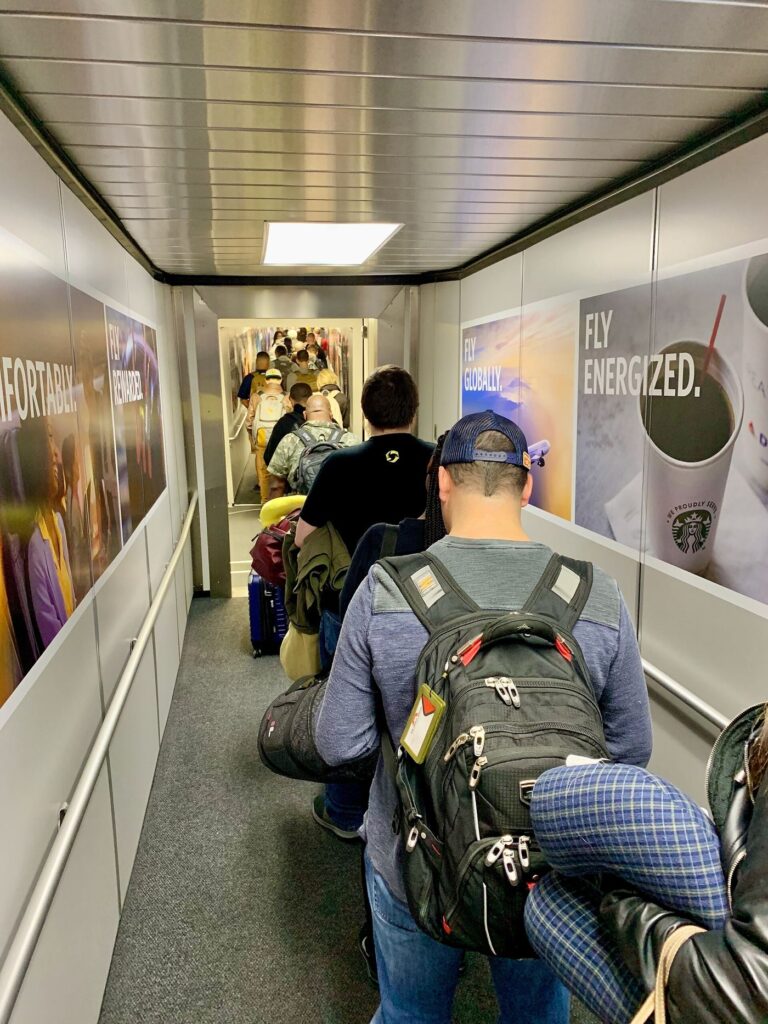
A failure in Delta Air Lines’ automated weight and balance system delayed around 2,000 flights across the United States on Sunday 22 November 2026, disrupting travel at the start of the busy Thanksgiving week. The system calculates how baggage and cargo should be loaded so that each aircraft stays within safe weight limits, and when it stopped working on Sunday morning, ground crews were forced to count bags by hand and complete the sums manually. The Federal Aviation Administration briefly stopped some flights heading for Hartsfield-Jackson Atlanta International Airport, Delta’s main hub and the busiest airport in the world, before easing the stop to a delay of about an hour. By Sunday evening, more than half of Delta’s flights had been delayed, according to the flight tracking service FlightAware.
What the Evidence Shows
Delta said its teams were using manual workarounds to get flights away safely while engineers worked to restore the automation, and by about 3.30 in the afternoon the system was working again. The airline said about 70 per cent of the delays were caused by the failure, with the rest blamed on bad weather in the north-east of the country. The disruption came little more than a week after a separate technology failure forced a nationwide ground stop that stranded tens of thousands of travellers. More than four million people are expected to pass through the Atlanta hub between 19 November and 1 December. Delta said the problem was not a cyberattack, and the aviation regulator confirmed its own air traffic systems were not involved. Reporting and analysis from sources such as Associated Press track the same developments, and specialists following the Delta weight and balance system failure say the direction is now consistent across independent lines of evidence.
The Wider Context
Regional and local reporting on the Delta weight and balance system failure often tells a different story from national coverage, because the effects land unevenly: one town’s pilot is another’s distant proposal. Analysts who follow the subject full-time read the local data first, arguing that national averages conceal the variation that decides whether a policy or a project deserves to spread.
What Happens Next
The longer story of the Delta weight and balance system failure is still being written by the people closest to it, whose experience rarely matches the earliest predictions of either supporters or critics. Reporting will continue to follow the evidence as it accumulates, including where it complicates today’s account. That is the deal serious coverage makes with its readers, and it holds for this subject as for any other. You can follow related developments in our coverage of news.
It is also worth remembering how quickly the picture in this area has changed before. Positions that looked settled a few years ago have been revised as new data arrived, and the same humility is appropriate now. The strongest coverage of this subject, and the most useful advice, tends to come from sources that update their views openly when the facts move, rather than defending an earlier position long after it has stopped fitting the evidence available.
