
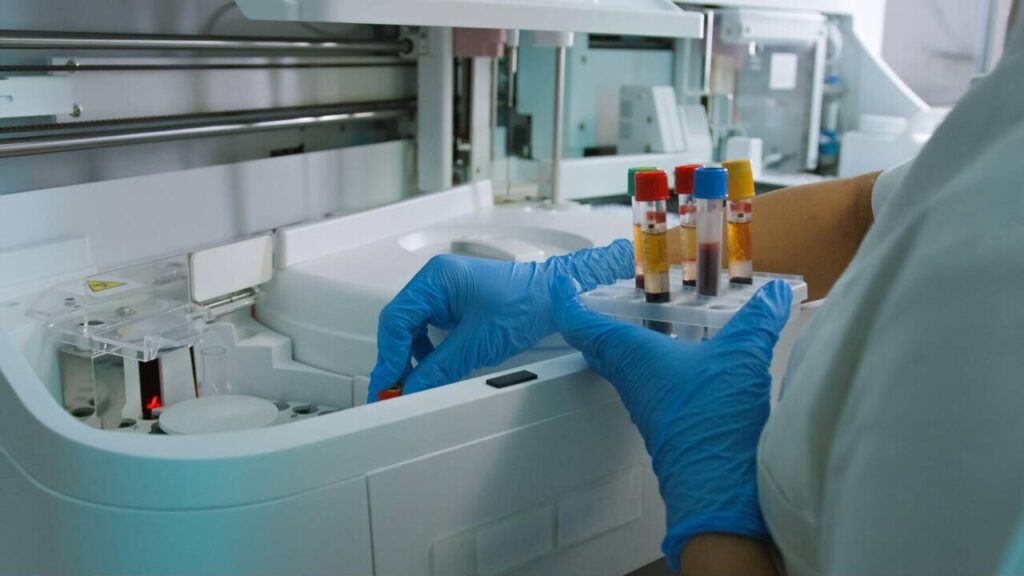
Anyone who trains seriously knows the frustration: the workouts are consistent, the diet is dialled in, yet energy crashes, gut pain strikes and progress stalls for reasons no coach can explain. For a significant number of people, that mystery is undiagnosed inflammatory bowel disease — Crohn’s disease or ulcerative colitis quietly developing for years before it is named. New research suggests the wait for answers could shrink dramatically, because the disease leaves fingerprints in the blood up to a decade before diagnosis.
Markers that precede symptoms by years
The findings come from biobank research: blood samples donated by healthy volunteers were stored, and years later scientists compared the samples of people who went on to develop inflammatory bowel disease with those who did not. Distinct patterns — in inflammatory proteins and immune activity — were already present long before symptoms. Crohn’s & Colitis organisations such as the Crohn’s & Colitis Foundation describe diagnosis delays of years as a central problem in IBD care; patients commonly see multiple doctors and receive incorrect labels — irritable bowel syndrome, food intolerance, stress — before the real cause is found.
Why it matters for active people
Undiagnosed IBD sabotages athletic lives in specific ways. Chronic intestinal inflammation impairs absorption of iron, B12, vitamin D and protein — the raw materials of recovery. Anaemia from slow blood loss flattens endurance. Urgency and pain dictate training schedules and race choices. Many sufferers quietly quit sports years before diagnosis, blaming themselves. A validated blood test that flags risk early would let doctors investigate the right patients sooner — with faecal calprotectin, imaging and endoscopy targeted at those whose blood already suggests disease — rather than dismissing symptoms in fit young people who “look healthy”. Our coverage looks at gut health and performance together.
From risk flag to real-world clinic
Enthusiasm needs its caveats. The markers predict risk at group level; turning them into an individual test with acceptable accuracy is unfinished work, and a positive flag would raise anxiety for people who may never develop disease. Researchers envisage first use in enriched populations — relatives of IBD patients, or people with persistent unexplained symptoms — rather than screening everyone. Validation across ethnicities and healthcare systems is under way, and health economists will ask whether earlier labelling actually improves outcomes or merely lengthens illness narratives.
The early-treatment prize
Gut symptoms and training: a practical word
While the early test matures, sports-medicine clinicians offer grounded advice for active people with persistent gut trouble: keep a symptom and training log, because patterns that look random week to week often resolve into evidence over a quarter; do not normalise blood in the stool, nocturnal symptoms or unexplained weight loss as “overtraining”; and ask specifically about inflammatory markers and faecal calprotectin before accepting a stress explanation. Screening for iron, B12 and vitamin D is cheap and frequently revelatory in this population. The overlap between athletic ambition and diagnostic delay is real — fit people are unusually good at compensating, and unusually reluctant to be patients. The blood-marker research promises a future in which compensation is not required; until it arrives, self-advocacy is the early-detection system that exists.
The reason to pursue it is the transformation of IBD treatment itself. Modern biologic and small-molecule therapies work best early, before bowel damage accumulates; trials increasingly show that early aggressive treatment changes the disease’s trajectory, reducing surgery and hospitalisation. A blood test that buys patients years of warning converts those therapies from rescue into prevention. For the athlete losing seasons to a nameless gut problem, that cannot come soon enough. More health and training science at our homepage.
