
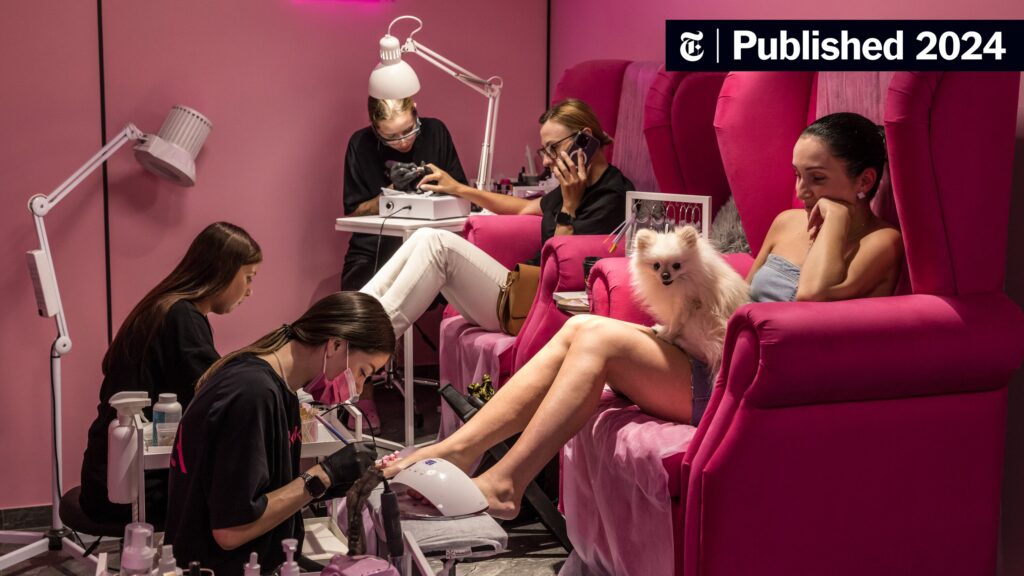
Hair appointments have built-in pauses that everyone recognizes – color needs time to develop, treatments need time to set, and stylists need a few minutes between steps to keep the result even. Those quiet stretches are where people reach for quick, predictable distractions on a phone. The best “in-between” experiences share the same qualities as a good salon workflow: clear timing, simple cues, and a finish that feels tidy instead of abrupt.
Why Waiting Time Feels Longer Without a Clear Timer
Salons run on timing. A toner might need a precise window. A mask might need a set period before rinsing. When the brain does not have a clear timeline, minutes feel longer, and attention starts bouncing. That is why many users keep short-form games on hand, including a lightweight jetx apk, because the round structure is easy to track while a processing timer runs in the background. The appeal is not complexity. It is a loop that starts cleanly, moves quickly, and ends without requiring extra setup. When the countdown inside a fast game is consistent, it matches the same mental model people already use during an appointment: “this part is open, this part is locked, and this part is finished.” That familiarity lowers friction, so the distraction stays calm instead of turning into another thing that needs managing.
How “Fast Rounds” Mirror Clean Beauty Routines
A strong haircut or color service is built from repeatable steps. The stylist checks the baseline, applies product evenly, watches the timing, then closes the step with a rinse or reset before moving forward. Fast games that feel easy to follow work the same way. They rely on a short entry phase, a clear lock moment, and an end beat that closes the round in a consistent order. When those cues are stable, attention stays relaxed, which matters during salon downtime because the brain is already tracking small details – a processing timer, a stylist’s instructions, or the next step in the service. If a phone experience is visually noisy or changes state without clear signals, it adds tension. A predictable loop does the opposite. It gives the mind something structured to watch without pulling focus away from the appointment itself, and it ends cleanly so it is easy to put the phone down when the stylist returns.
Micro-signals that keep the pace readable
In fast loops, tiny UI details do most of the work. A clear phase indicator helps the user understand what is available right now. A stable countdown teaches the rhythm quickly. A lock moment that is obvious removes second-guessing. These micro-signals matter in a salon setting because people often glance up to check a stylist’s movement or listen for a question, then glance back down. The screen has to be understandable on a partial glance. When the interface behaves the same way every round, the brain stops translating what it sees and starts following the beat. That is the same reason consistent salon routines feel calming: the next step is expected, and the transition is easy to recognize.
Mobile Attention During Treatments Needs Calm Design
Phones get used in imperfect conditions – bright lighting, wet hands after a rinse, low volume because the salon is busy, and interruptions that break focus. A fast game experience that holds up in those conditions tends to share a few traits: stable layout, minimal clutter, and status cues that stay in the same place. That matters because accidental taps happen more often when someone is balancing a cape, holding a coffee, or shifting in the chair. If the screen moves buttons around between phases, it increases misreads. If the interface uses too many overlapping labels, it forces extra reading at the wrong moment. A calmer design reduces those errors. It also makes it easier to stop immediately when the stylist says it is time to rinse or move to the next step. The goal is a distraction that stays lightweight, not one that demands full attention.
A Simple Checklist for “In-Between” Phone Use
Salon downtime has a different rhythm than couch time. The best phone habits keep attention flexible, so it is easy to switch back to the appointment without friction. The focus is on predictability and low effort, not on chasing intensity.
- Keep notifications quiet during processing steps, so a timer or state change is not missed.
- Use screen brightness that stays readable under salon lighting without glare.
- Avoid multistep logins right before a treatment step, so stopping is simple when needed.
- Prefer experiences with clear phase cues, so a quick glance is enough to understand the state.
- Reset between rounds when attention is pulled away, so the next start feels clean.
These habits also support the salon workflow. When the phone experience is easy to pause, conversations with the stylist stay natural, and there is less awkwardness when instructions are given mid-session.
Why the Best Downtime Distractions End Cleanly
The end of a short loop matters more than it seems. An ending that is visually unclear leaves mental residue, and mental residue lingers when the stylist comes back with a question or a next step. A clean ending closes the moment in an orderly way: the round ends, the result is confirmed, and the screen resets without confusion. That makes it easier to put the phone away quickly, which is the real requirement in a salon chair. A good appointment has a similar feel. Each step closes cleanly before the next begins – rinse, towel, section, apply, set, finish. When a phone distraction follows the same “closed step” logic, it fits into the natural pauses of an appointment instead of competing with them. The result is a calmer wait, a smoother transition back to the service, and a downtime habit that does not disrupt the experience people are actually there for.
