
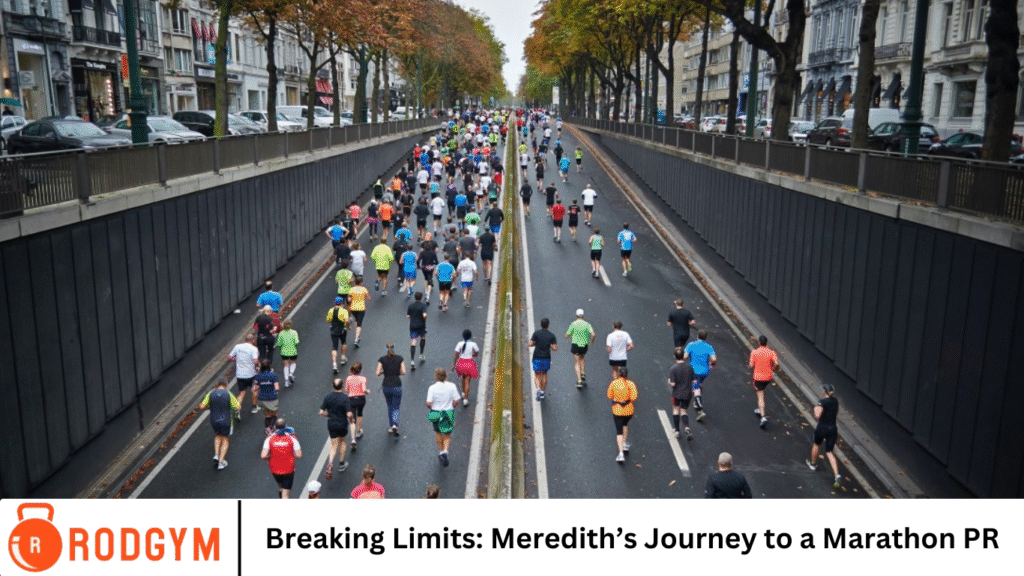
Marathon runners know that breaking through personal barriers isn’t just about physical endurance—it’s also a mental and strategic game. And for Meredith, the culmination of countless early mornings, grueling hill repeats, diet experiments, and wardrobe mishaps all came together in a single weekend triumph.
Here’s the full story behind how she not only crushed her personal best (PR), but obliterated it by a jaw-dropping 12 minutes at the 2024 Philadelphia Marathon.
More Read: Struggling to Set New PRs? Fix Your Powerlifting Program
1. The Backstory: From Beginner’s Luck to The Long Haul
Back in 2019, Meredith completed her first marathon with a surprisingly strong finish time. Many rolled their eyes—was it just beginner’s luck? Had she underestimated what she was truly capable of? After nearly six years and countless races, that question still lingered. Each year, she came close—but that elusive new PR didn’t happen…until she put it all on the line in 2024.
2. Training in Season Two: Rolling Through the Highs and Lows
When Training Diaries kicked off its second season, Meredith was fresh off last year’s Philadelphia race—and eager to go faster. She ramped up her weekly mileage, focusing on diversity in her runs:
- Weekly Quality Workouts: Hill repeats, tempo runs, and long intervals built strength and speed.
- Consistency Over Intensity: 80+ miles/week became routine, with at least one recovery run daily.
- Cross-Training: Twice-weekly cycling and yoga sessions helped with flexibility and busted mental fatigue.
Yet it wasn’t always smooth. Foggy mornings, travel “road races,” and heatwaves tested her dedication. But she doubled down—because if you’re going for a PR, complacency isn’t an option.
3. Fueling for Performance: What Worked, What Didn’t
One of the biggest lessons Meredith learned: your performance is only as good as your fuel. She tested several nutrition strategies:
- Gluten-Free Carb Loading: Shifting to gluten-free pasta during taper week reduced bloating and helped her stay lighter.
- Customized Electrolyte Mixes: Her coach mixed sodium and potassium to match those lost in sweat, preventing cramps.
- Mid-Run Nutrition: Switching from energy gels to chewable gummies helped with digestion issues she faced last year.
While experimenting, some trial-and-error was inevitable: too many caffeine gels gave her heart palpitations, and trial electrolyte tablets caused stomach cramps. But by fine-tuning every variable, she found the perfect race-day setup.
4. Tackling Injuries and Setbacks
No marathon training plan goes untested by injuries. Meredith battled:
- A minor IT band flare-up halfway through August. Physical therapy, foam rolling, and reduced mileage got her back on track in ten days.
- A 48-hour stomach bug three weeks before race day. Extra rest and boiled potatoes restored her energy just in time.
- A misaligned left shoe situation that led to ankle soreness. Switching to a slightly wider toe box before races made all the difference.
Most of all, the mental side—accepting the setback, trusting the plan, and acknowledging that injury doesn’t mean the end—became her mantra.
5. Mastering the Treadmill: When Outside Isn’t an Option
Bad weather? Busy schedule? No problem. Meredith embraced treadmill training:
- Hill Workouts: She simulated rolling terrain with incline runs.
- Tempo Intervals: Running at marathon pace for 10–12 miles was easier to maintain indoors.
- Mental Edge: Treadmill running taught her to zone in on effort, cadence, and breath rhythm.
It wasn’t just backup—it was an asset. When storms rolled in, miles didn’t stop.
6. Wardrobe Malfunctions & Runner’s Regrets
Every runner will have a day they want to forget. Meredith’s wardrobe oopsies included:
- Chafed shorts on 20-mile runs—thankfully she switched to seamless compression shorts after one painfully slow recovery run.
- Sleeping in dirty socks before a key long run—yes, athlete hygiene matters.
- Loose shoe laces caused a mid-run trip. After that, LOCKLACES became her go-to solution.
Those mistakes were small, but they hurt the ego. More importantly, they taught the difference between overlooked details and life-ruining fail points.
7. Long Run Logic: The Backbone of PR Training
Let’s face it—long runs are where everything happens:
- Progressive Pace: Starting easy, finishing at goal marathon pace.
- Breakdown Runs: Every 5th long run ended with 2–4 miles at solid effort to simulate race fatigue.
- Mental Entertainment: Mixing playlists, podcasts, and route changes kept her brain engaged on those 20‑mile slog days.
By race day, she had run 25+ miles in training more than once—with bookended paces around her target marathon speed. Her confidence soared.
8. Race Day Recap: Beating a Six-Year Plateau
Sunday, November 24, 2024. Race morning in Philadelphia was crisp—just the way Meredith likes it:
- Easy warm-up jog with dynamic stretches.
- Steady pace off the gun—true to goal, not chasing early surges.
- Miles 10–20: Holding strong, grooving with the crowd at Rocky Steps.
- Final 10K: Took gels at 30k, quarter-mile fueling stops after that. Hydration on schedule.
Crossing the line, she looked at her watch: 3:27:15. That’s right—12 minutes faster than her marathon PR. She also blew away last year’s time by 22 minutes.
9. Why Philadelphia 2024 Delivered on Speed
Sure, Meredith trained well—but the course also helped:
- Flatter Layout than previous marathons.
- Helpful Downhills—like the gentle slope on Kelly Drive.
- Scenic, High-Energy Zones: Old City and South Philly sounded like a rock concert.
- Ideal Weather: 45°F at start, sun by mid-race.
Her experience, specialized training, and that perfect course alignment made this year truly special.
10. Lessons Learned & Advice for Fellow Runners
Meredith’s triumph wasn’t magic—it was methodical. Here’s what she recommends to runners chasing their own PR:
- Run Consistent Miles: Skip fads; build a base.
- Do Quality Work: Hill reps, tempo runs, pace-specific workouts resist plateaus.
- Prioritize Recovery: PT, sleep, stretching—they’re non-negotiable.
- Dial-In Nutrition: Race day is no experiment.
- Practice the Race: Treadmill, nutrition, hydration—get it nailed before 20 miles.
- Pick a Supportive Course: Consider elevation, aid stations, and crowd vibes.
- Stay Mentally Steady: Racing is 80% mental—when it hurts, you go deeper.
11. What’s Next for Meredith & Season Three Teasers
So what’s next after such a PR blowout? Meredith teases:
- Possibly Boston Qualifier plans—if she can cut another 22+ minutes, she’ll tick that box.
- A sub‑4ers Club upset with a fast 50K off-road adventure.
- More video content: vlogs of long runs, behind‑the‑scenes, gear breakdowns, and Q&As for beginner to intermediate marathoners.
Stay tuned—Season Three could be the most exciting yet.
Frequently Asked Question
How long did it take Meredith to train for her marathon PR?
Meredith trained for approximately 16 weeks, following a structured plan that focused on weekly mileage, long runs, speed workouts, and recovery. Her base training in the months prior also contributed significantly to her fitness level on race day.
What was Meredith’s previous marathon personal record (PR)?
Before the 2024 Philadelphia Marathon, Meredith’s PR was set in 2019 during her first marathon. She hadn’t broken that time for six years—until this race, where she improved by 12 full minutes.
What training methods helped Meredith improve her marathon time?
Key methods included:
- Progressive long runs
- Tempo and hill workouts
- Treadmill interval sessions
- Cross-training (cycling and yoga)
- Deliberate recovery weeks
This balanced, adaptive approach kept her improving without overtraining.
How did Meredith fuel during marathon training and on race day?
She used a combination of gluten-free carb loading, electrolyte-balanced hydration, and mid-run energy chews instead of traditional gels. Testing her fueling strategy during long runs ensured her stomach could handle it on race day.
What made the 2024 Philadelphia Marathon a great PR course?
The Philadelphia course offered:
- A mostly flat route with minimal elevation gain
- Cool fall weather
- Enthusiastic crowd support in key areas like Center City and Manayunk
- Wide roads for easy pacing and rhythm
These conditions were ideal for a personal record attempt.
What setbacks did Meredith face during training?
Meredith dealt with:
- A mild IT band issue
- A stomach virus weeks before the race
- Minor gear-related issues (e.g., ankle pain from ill-fitting shoes)
She overcame these with rest, adjustments, and discipline—not letting setbacks derail her momentum.
Will Meredith continue the Training Diaries series after her PR?
Yes! Meredith plans to return for Season Three of Training Diaries, possibly targeting a Boston Qualifier or trail ultramarathon. Future content may also include gear reviews, in-depth training plans, and more behind-the-scenes insights.
Conclusion
Meredith’s marathon journey is a powerful reminder that progress isn’t always linear—but with persistence, strategy, and heart, breakthroughs happen. After six years of chasing a new personal record, she finally shattered it with discipline, smart training, and the perfect race conditions. Her story proves that every mile, every setback, and every early morning run builds toward something bigger. Whether you’re a seasoned runner or training for your first race, Meredith’s experience offers valuable lessons: trust the process, believe in your potential, and never stop breaking limits.
