
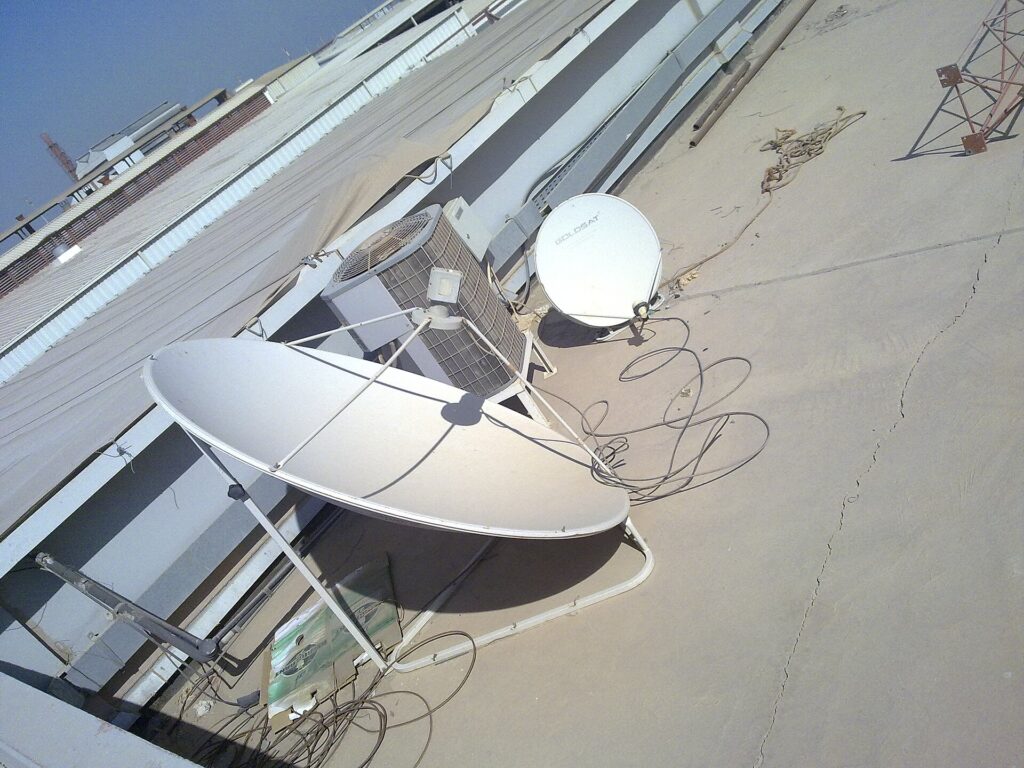
For a farming family far from the nearest fibre cabinet, broadband has always been a promise made by someone else. That is beginning to change. Constellations of low-orbit satellites now deliver connections fast enough for video calls, schoolwork and cloud software to valleys, islands and desert settlements that terrestrial networks never reached. It is not the cheapest broadband, and it is not the fastest, but for millions of people it is the first broadband that actually turns up.
The technology has moved in a decade from experimental terminals to a standard option listed beside mobile data. Anyone browsing the technology coverage on our front page has seen satellite stories multiply, and for once the hype rests on working hardware rather than artist impressions. Terminals self-align, satellites hand connections between each other as they pass overhead, and capacity rises with every launch.
A different kind of broadband
Altitude is the whole trick. Older communications satellites sat in geostationary orbit so far away that signals took a noticeable fraction of a second to make the round trip, which made calls lag and games unplayable. Low-orbit systems fly a few hundred kilometres up instead, cutting that delay dramatically at the cost of needing thousands of satellites to keep one always in view. The European Space Agency’s telecommunications programme tracks how this architecture has reshaped the sector.
The result feels surprisingly ordinary, which is precisely the point. A terminal on a roof, a clear view of the sky, and a household is online with speeds that would have embarrassed many fixed-line connections five years ago. Weather can dent performance, and trees are the enemy of every installer, but the baseline experience has crossed the threshold from novelty to utility for everyday work and study.
Who is signing up first
The earliest adopters tell a story about geography rather than gadgets. Remote farms use satellite links to run precision agriculture and sell produce online. Fishing fleets and merchant ships, long limited to expensive and sluggish connections, now offer crews something closer to shore-side internet. Airlines and rail operators are adopting the same systems for passengers, while emergency services value a network that still works when ground infrastructure floods or burns.
Governments have noticed. Subsidy schemes that once paid to trench fibre to a handful of homes are being compared, sometimes unfavourably, with the cost of simply giving those households a terminal. NASA’s long work on space communications underpins much of the science here, even where the services themselves are commercial. The policy question is shifting from how to connect remote places to who should pay, and what obligations commercial constellations should carry.
Installation has simplified in step. Early adopters wrestled with alignment and cabling; today’s terminals find their satellites automatically, report their own faults and update themselves overnight. That ease matters commercially, because a service that needs an engineer in a van has a very different cost base from one that arrives in a box and simply works by lunchtime.
Limits written in physics
Satellite internet will not replace urban fibre, and it does not pretend to. Capacity per square kilometre is limited, so a city full of terminals would slow everyone down. Astronomers raise legitimate concerns about bright satellites crossing telescope images, and regulators worry about crowded orbits and debris. Prices, while falling, remain a barrier for the poorest households who might benefit most.
Even so, the direction of travel is clear. Each new generation of satellites carries more capacity, terminals get smaller and cheaper, and direct-to-phone services are beginning to close the last gaps for basic messaging. For the places cables forgot, the sky has quietly become the most practical wire available, and that changes what it means to live somewhere remote.
The remaining debates are about fairness and the night sky rather than feasibility, which is itself a milestone. A technology stops being experimental when the argument moves from whether it works to how it should be governed.
