
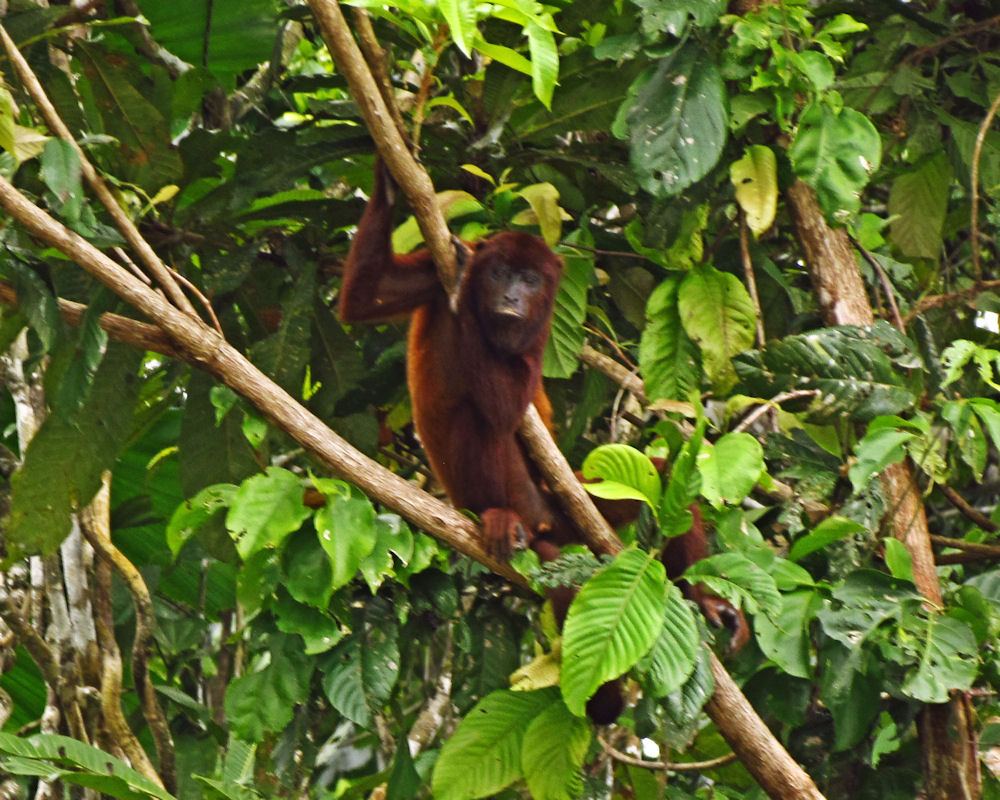
Two new species of howler monkey have been discovered in the Amazon rainforest, the first new species in the genus for 85 years, according to a study published in Communications Biology and reported on 10 November 2026. The research, led by Romina Batista and Jean Boubli of the University of Salford with international collaborators, analysed the genomes of 86 howler monkeys across South and Central America. The two new species are Alouatta iroi, the Pantepui red howler of the northwestern Amazon, and Alouatta matogrossensis, the Mato Grosso red howler of southern Amazonia. The study examined genetic samples from 86 howler monkeys collected across their geographical range in South and Central America.
What the Evidence Shows
Howler monkeys are among the loudest land animals, and their calls carry for kilometres through the forest, yet these two species had gone unrecognised because they look similar to their relatives. Genetic analysis showed they are distinct: Alouatta iroi has a yellowish-brown to golden coat and lives between the Rio Branco and Rio Cauaburi, while Alouatta matogrossensis has a reddish-brown coat and lives between the Rio Madeira and Rio Teles Pires. Several populations, including the newly recognised species, may face a significant risk of extinction and have never been assessed for conservation status. The research also helps address gaps in knowledge about how many species exist and where each one lives. Reporting and analysis from sources such as Nature track the same developments, and specialists following the two new howler monkey species say the direction is now consistent across independent lines of evidence.
The Wider Context
The wider context is a research landscape in which replication and open data now decide reputations. Findings connected to the two new howler monkey species are being checked by independent groups with shared datasets, and the teams involved publish their methods in full so rivals can test every step. That discipline is slower than a headline cycle, but it is why results in this area increasingly survive first contact with scrutiny.
What Happens Next
What happens next in the story of the two new howler monkey species will be decided by follow-up work already under way: larger samples, longer observation and instruments that have not yet come online. The researchers involved are unusually united on one point, that the current results justify the next investment of time and money. Readers will not have to wait long for the first tests of that claim. You can follow related developments in our coverage of science.
None of this will be settled by a single announcement, study or product launch. The pattern to watch is accumulation: independent confirmations, honest reporting of failures and steady improvement in the underlying numbers. Readers who follow those signals, rather than the loudest claim of the week, will understand this subject better than most of the commentary surrounding it suggests is possible.
